Nobody Inherits a Type
Ask two people to name the most beautiful face they know and you get two answers, then an argument. Culture is the usual explanation, and it’s true enough to be useless: it predicts that everyone raised in the same place should broadly agree, and they don’t. A twin study from 2015 got closer to what’s actually going on.
Germine and colleagues had 547 pairs of identical twins and 214 pairs of same-sex fraternal twins rate 200 faces each. Identical twins share their genes and, in most cases, their upbringing, so if a taste in faces came from either, those pairs should have lined up. They didn’t. Around 78 per cent of the variation in individual face preference traced to environments unique to each twin, against roughly 22 per cent for genes. Averaged across people, the researchers put the level of agreement at about half.
The comparison that makes this bite is the one they ran against face recognition, which is about 68 per cent heritable and sits among the most genetic traits anyone has measured. Same stimulus, overlapping brain regions, opposite origin.
Which is why I can look at this 1993 close-up of Gail Elliott and register the brow line first, while somebody else stops at the mouth, and neither of us is wrong or even interestingly biased. We were built by different rooms. The experiences doing the building aren’t the ones a sociologist would list either: not income, not schooling, not the neighbourhood, since those are shared by siblings and wash out in the numbers. Friends, faces in magazines, whoever you happened to look at for a long time when you were fifteen.
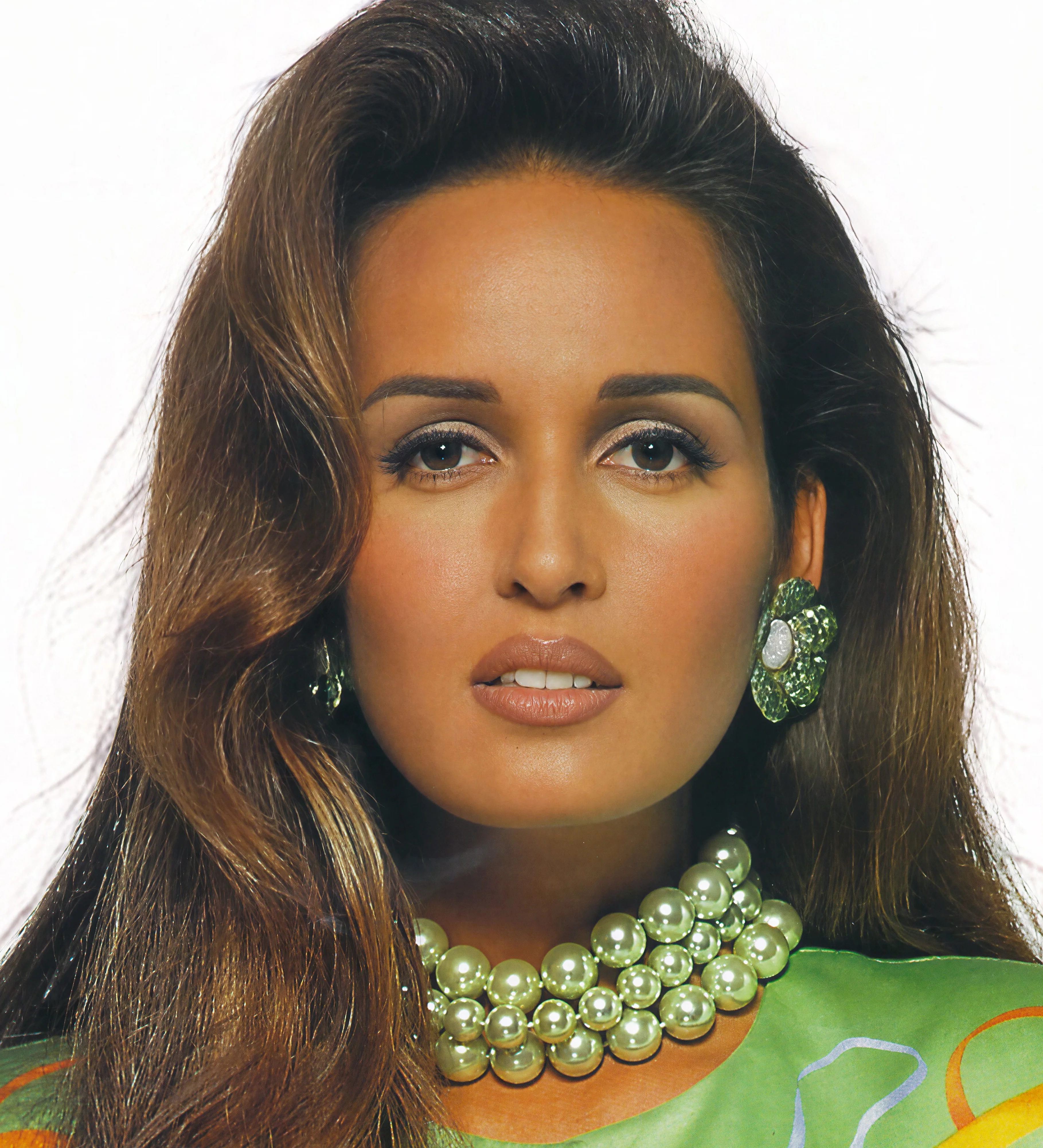
Symmetry and averageness still test well nearly everywhere. That’s the half we agree on, and it’s the boring half.
Sources:
-
Individual Aesthetic Preferences for Faces Are Shaped Mostly by Environments, Not Genes — Current Biology (PubMed)
-
Is beauty really in the ‘eye of the beholder’? Yes, and here’s why — ScienceDaily
Filed under Gail Elliott
This post is timestamped using Blockchain technology. Verify