An Armful of Ferragamo
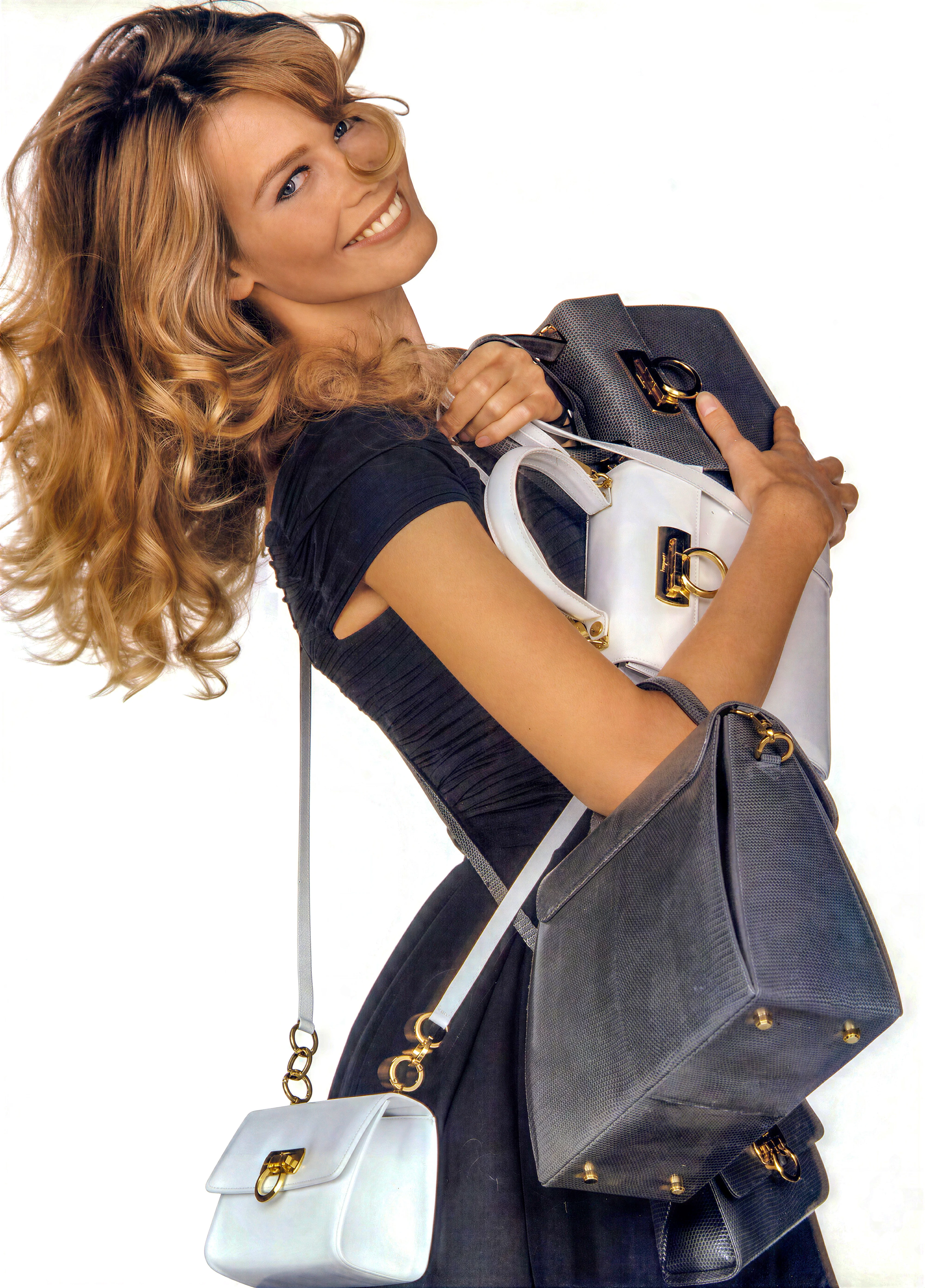
Claudia Schiffer is caught mid-laugh, head tipped back, hair flung across a white studio ground, both arms loaded with handbags. That alone sets the page apart from most supermodel advertising of the early nineties, which sold you distance: the face turned away, the glance cut sideways, the model posed the way a statue holds its plinth. Ferragamo went the other way and sold warmth, hard.
Count the bags. A grey lizard tote hangs off one shoulder, a white leather bag is pressed to her chest, a small pale purse swings from a gold chain at her hip, and another lizard piece rides the crook of her arm. She isn’t holding them out for inspection; she hugs the pile against her body and grips it the way you hold things you have no intention of putting down. This is not one hero product lit like a relic. It is an armful, the accessory version of taking the whole line home. Ferragamo built its name on shoes, a house founded by a shoemaker, and by 1992 it was pushing hard into leather goods. The campaign’s job was to make a wardrobe of bags feel like a single want.
What ties the pile together is the hardware. Every clasp is the same gold omega, the Gancini hook that Ferragamo leans on the way Gucci leans on its horsebit. The bags differ in colour, skin and size, but the gold catch repeats down the whole armful, and that repetition is the pitch. Buy one and you have bought into a set. The motif carries the branding so the clothes don’t have to, which is why Schiffer wears a plain dark ruched dress that gives the camera nothing to read except her face and the gold.
Schiffer suited that warmth. Her Guess campaigns had cast her in a sunny, Bardot-ish register rather than a severe one, and by 1992 she was earning twenty thousand dollars for a single runway show and appearing for what now reads like half the houses in Europe. Where Linda Evangelista could make a difficult dress look like an argument, Schiffer made expensive things look like fun. Ferragamo wanted the second thing. Handbags are bought on desire rather than awe, and a wide grin sells desire more efficiently than a cold stare ever has.
There is no set here, no villa, no cobbled street, nothing but seamless white. That is a confident choice. Ralph Lauren would have handed you a boat or a veranda and let the scenery do the aspiration; Ferragamo hands you a woman and her haul against nothing at all. The emptiness forces everything onto the smile and the merchandise. It also dates the picture, since that hard studio light and blown-out background belong to a moment just before every campaign felt obliged to look like a film still.
The page ran in American Vogue in February 1992, aimed squarely at the readers a shoe house wanted to convert into bag customers. A brand whose heritage lived below the ankle was buying its way up the body, one gold clasp at a time.
Most luxury advertising trades in longing, showing you a woman who has something and daring you to want it too. This page skips the wanting. Schiffer already owns everything, in both arms, and treats the haul as a joke rather than a prize. Watch how she carries the whole cheerful haul, and the real gamble shows: it sells satisfaction instead of desire, which almost nobody in the business has the nerve to try.
Sources:
- Claudia Schiffer — Wikipedia
Filed under Salvatore Ferragamo · Claudia Schiffer
This post is timestamped using Blockchain technology. Verify