Glaviano Wouldn't Shoot Kate Moss
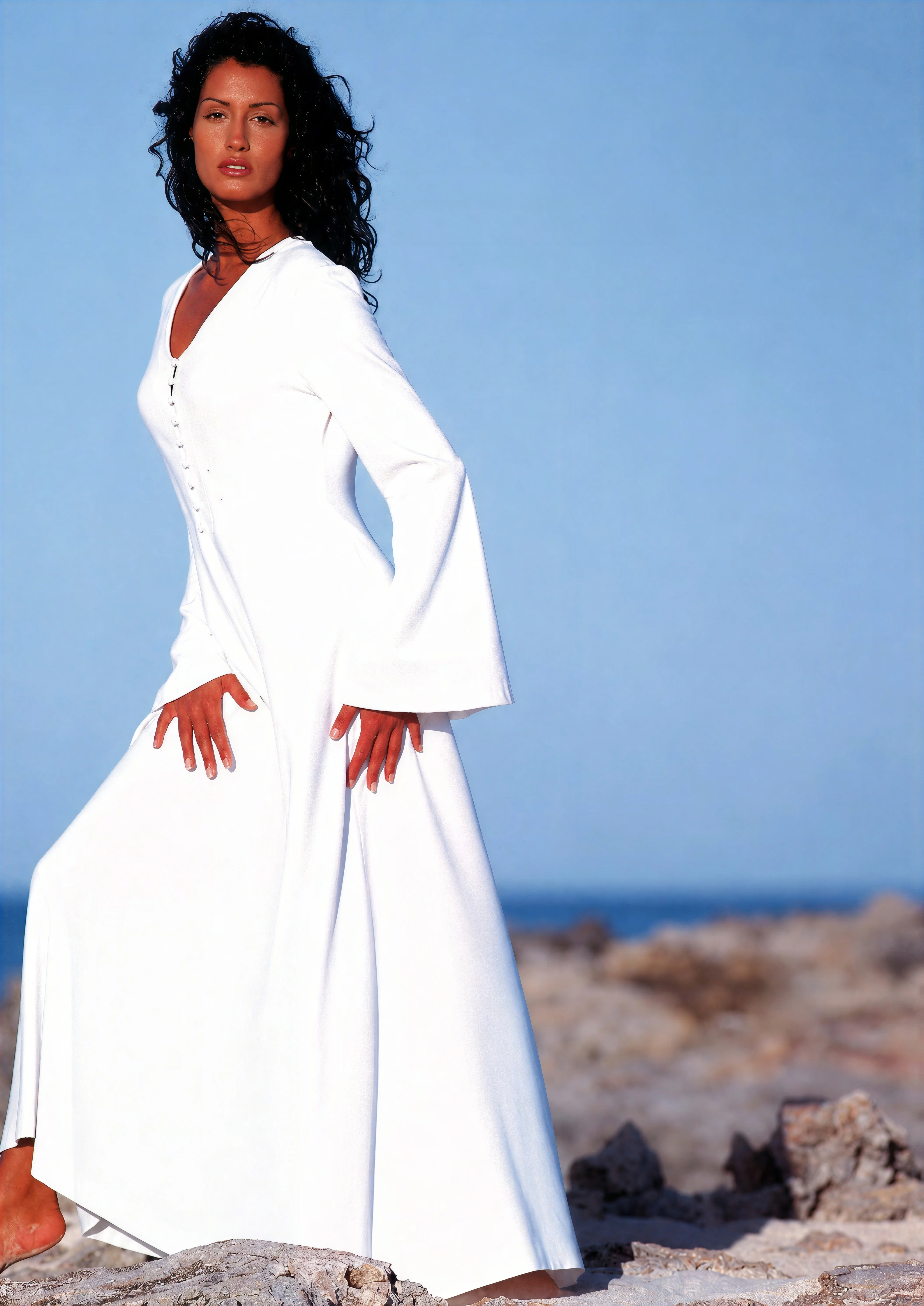
In 1993 Marco Glaviano was still doing the thing he did better than almost anyone, putting a woman on hot rock in hard sun with the sea a flat blue plane behind her and letting the light carry the rest. He'd worked this register since the late seventies, and by the early nineties it had a name and a market. Elite's John Casablancas had turned a handful of faces into supermodels, and Glaviano shot their calendars: Paulina Porizkova, Cindy Crawford, Eva Herzigova, on St Barth beaches that grew as recognisable as the women standing on them.
He was never only a beach photographer. He trained as an architect in Palermo and played jazz seriously before he took photography seriously, and in 1982 he published the first digital picture ever to run in American Vogue, years before the rest of the business trusted the format. He advised Kodak and Hasselblad on where the technology was heading. There's a small irony in that, a digital pioneer whose signature was the least digital thing imaginable: warm skin, real sun, salt drying on a forearm.
I read the 1993 work as a refusal to treat the woman as a prop. Glaviano has said the model does half the picture and the photographer the other half, and he means it as arithmetic, not flattery. "They really had all the power," he told one interviewer about that stretch of years. The supermodels chose their photographers, and enough of them chose him that he ran up more than 500 magazine covers. Yasmeen Ghauri was one of the Montreal-born faces he worked with in those years, and she gives the camera the same thing his best pictures always ask for, presence without apology.
1993 is also the year the ground shifted under all of it. Corinne Day had already photographed a young Kate Moss for Vogue, pale and slight and shot like a snapshot on purpose, and the business lurched toward what it called grunge. Glaviano was still on contract to Harper's Bazaar, the kind of arrangement most photographers spend a career trying to land, when the magazine asked him to shoot a Kate Moss cover. He broke the contract rather than take the job. The refusal wasn't personal: he called Moss "a very sweet, nice, cute girl," just "never a supermodel to me." What he couldn't stomach was the turn she stood for, what he later named a "Beauty Apocalypse," the arrival of what he bluntly called the anorexia crowd, and he says he still doesn't understand how it happened.
You can argue he ended up on the wrong side of history. I'd say he landed on the right side of a beauty that history simply got bored with, a glamour built on health and heat that nobody stages now. Yasmeen Ghauri stands right in the middle of that, barefoot on the rocks in a long white dress, her chin level and her weight low, staring the camera down as if it had asked her a stupid question, that white column against the blue.
Sources:
-
How Photographer Marco Glaviano Helped Create the Supermodel — InsideHook
-
SUPERMODELS by Marco Glaviano — The Little Black Gallery
-
Marco Glaviano on Women's Empowerment and the Supermodel Phenomenon — Space Gallery St Barth
-
Marco Glaviano — Wikipedia
Filed under Kate Moss
This post is timestamped using Blockchain technology. Verify