Saint Maud Burns From the Inside
Rose Glass made Saint Maud for roughly $2.5 million, which is less than the catering budget on most studio horror. You'd never know it. The film looks like it cost ten times that, partly because Ben Fordesman's cinematography treats a bleak Scarborough beachfront like it's the edge of the world, and partly because the production design understands that a lonely bedsit can be more frightening than any haunted house if you shoot it correctly.
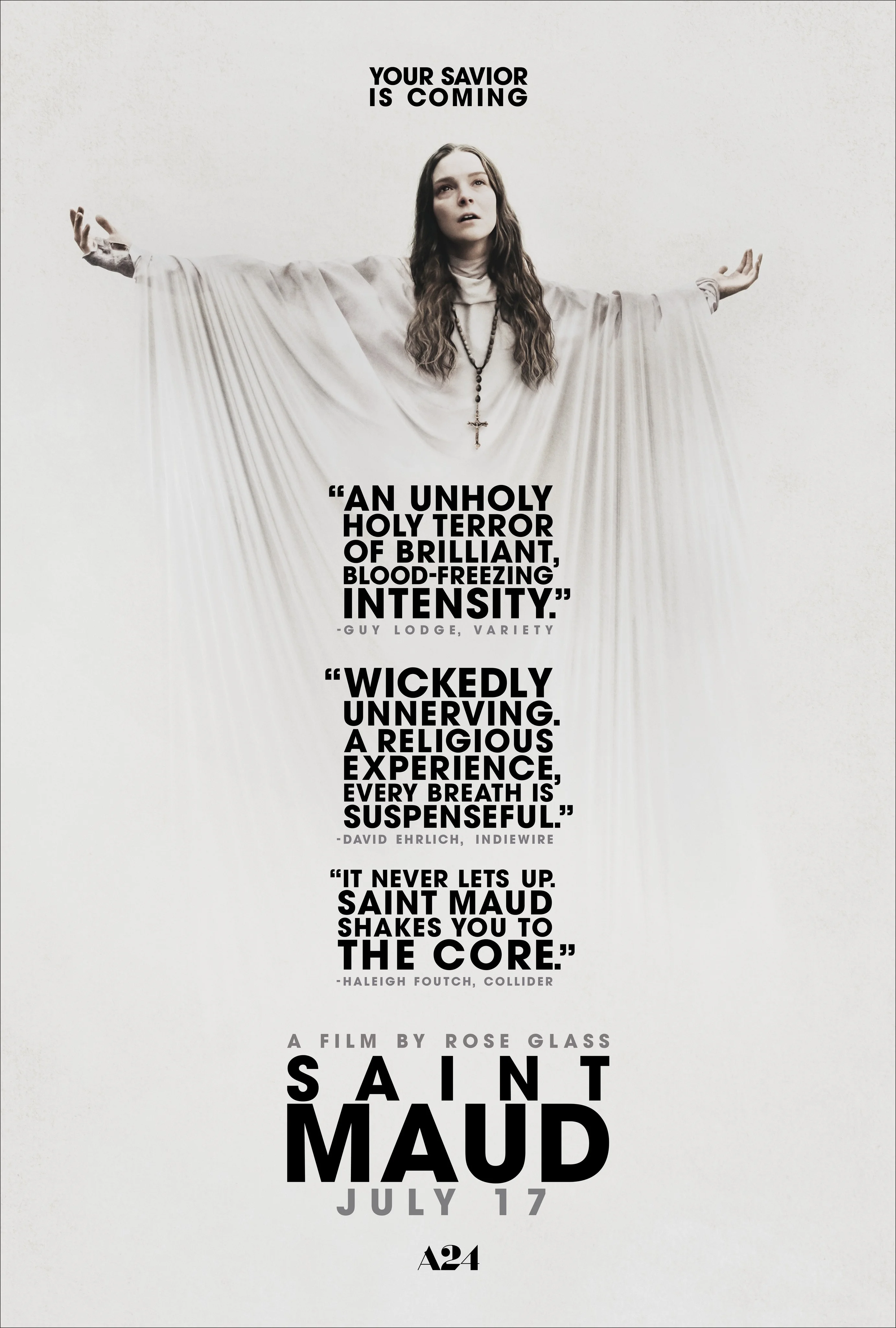
Morfydd Clark plays Maud, a palliative care nurse who has recently converted to Catholicism after something went wrong with a previous patient. She's assigned to care for Amanda, a terminally ill choreographer played by Jennifer Ehle with the precise detachment of someone who has already made peace with dying and finds Maud's earnestness first curious, then entertaining, then repulsive. The power dynamic between them is the engine of the film. Amanda has money, sophistication, a history of artistic achievement. Maud has God. For a while, God seems like enough.
The possession question is handled with more ambiguity than most horror films would tolerate. Maud experiences physical sensations she interprets as divine. Her body arches. Her eyes roll back. Whether this is ecstasy or seizure depends entirely on which character you believe, and Glass refuses to resolve the tension. She cited Taxi Driver as an influence, which tracks: Maud shares Travis Bickle's conviction that she has been chosen for a sacred mission, and the same inability to recognise that the mission is the disease.
I keep returning to Adam Janota Bzowski's score. Also a debut. He built what he called a Colourbox, a folder of processed sounds made by hitting objects with a drumstick and running the recordings through effects chains until they became something between music and industrial noise. The result sits underneath the film like a migraine, present even when you can't quite identify it. There's a click-clack sound that recurs, something straining and ready to snap. It won an Ivor Novello nomination, which felt overdue by the time it happened.
Glass joins a line of directors who understand that faith and horror share a border. The same territory The Blackcoat's Daughter occupies, where the supernatural isn't the threat but the comfort, and the real horror is what happens when it withdraws. Saint Maud takes that idea further. Maud's self-mortification scenes, nails pressed into the soles of her shoes, kneeling on broken glass, are shot with a tenderness that makes them harder to watch than if they were played for shock. She isn't being punished. She's trying to feel something she felt once and can't find again.
The final image is the cruelest thing A24 has put on screen. We see Maud's apotheosis through her own eyes first: wings, a crowd of worshippers, transfiguration. Then a smash cut to reality. An 84-minute film and Glass saves her most devastating technique for the last three seconds. The entire audience at Toronto reportedly gasped. I believe it. Some images you can't unsee, not because they're graphic but because they contain two contradictory truths at once and force you to hold both.
Sources
-
Saint Maud Review - Variety
-
Saint Maud - BFI Sight and Sound
-
Composer Interview - SPIN
Filed under Film & TV
This post is timestamped using Blockchain technology. Verify