The Blackcoat's Daughter
Oz Perkins finished the script in 2012. It took three years to find financing because nobody believed it could work as a film. They were half right. The Blackcoat's Daughter doesn't work as a conventional horror movie. It works as something considerably stranger and more durable than that.
The setup is boarding school gothic at its most reduced. Bramford Academy empties out for winter break. Two girls remain. Kat, a freshman played by Kiernan Shipka, has parents who simply don't show up. Rose, a senior played by Lucy Boynton, has manipulated the dates so she can deal with a suspected pregnancy. Meanwhile a third storyline follows Joan, an asylum escapee played by Emma Roberts, hitchhiking through upstate New York. These three threads intercut without explanation, and the film trusts you to hold all of them without a timeline card or a helpful chyron.
That structural confidence is the first thing that separates this from the possession films it superficially resembles. Perkins isn't interested in the mechanics of demonic inhabitation. He treats the possession the way Tarkovsky treated the Zone in Stalker, as a condition that reveals character rather than overwhelming it. Kat doesn't thrash around or speak in tongues. She gets quieter. She bows to the furnace. She develops a stillness that Shipka calibrates with precision that shouldn't be available to someone who was fifteen when she filmed this.
I'm not sure the film entirely earns its non-linear structure. There's a reveal in the final act that recontextualises Joan's storyline, and while it's been foreshadowed with care, the emotional payoff depends on you having felt something for a character the film has kept deliberately opaque. Emma Roberts does what she can with this. Her performance is the quietest thing she's ever done, almost withdrawn, but the screenplay gives her so little to work with before the turn that the revelation lands more as an intellectual satisfaction than a gut punch.
The atmosphere, though. Perkins builds dread the way frost forms on glass, so gradually that you only notice when you can't see through it anymore. Elvis Perkins, Oz's brother, composed the score having never worked on a film before, and you can hear that unfamiliarity working in its favour. It doesn't sound like a horror score. It sounds like someone trying to describe loneliness with a piano and not quite finding the right notes, which turns out to be exactly right for what this film is doing.
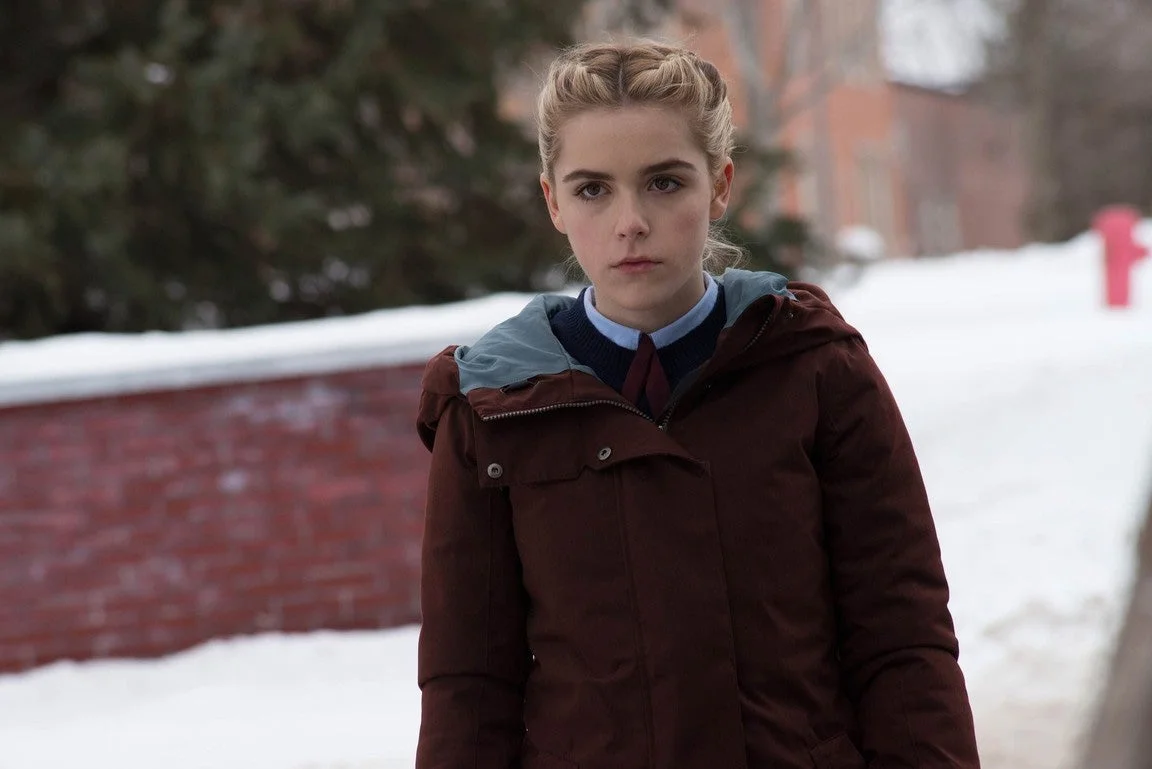
Perkins has said explicitly that the horror elements are a Trojan Horse. His actual intent was to tell a sad story about loss. That framing might sound like directorial pretension, the kind of thing filmmakers say to distance themselves from genre, but the final image proves he means it. Kat, now adult, alone on a frozen road, weeping because the demon has left her. Not because it possessed her. Because it abandoned her. The thing that every horror film positions as the threat is, for Kat, the only presence that ever stayed. When it goes, she has nothing.
This is where the Perkins biography becomes unavoidable. Oz lost his father Anthony Perkins, Norman Bates himself, to AIDS-related pneumonia in 1992. His mother Berry Berenson was killed on American Airlines Flight 11 on September 11, 2001. I don't think you need to know this to understand the film, but you can feel it in the architecture. The Blackcoat's Daughter understands, at a cellular level, what it means to be left behind.
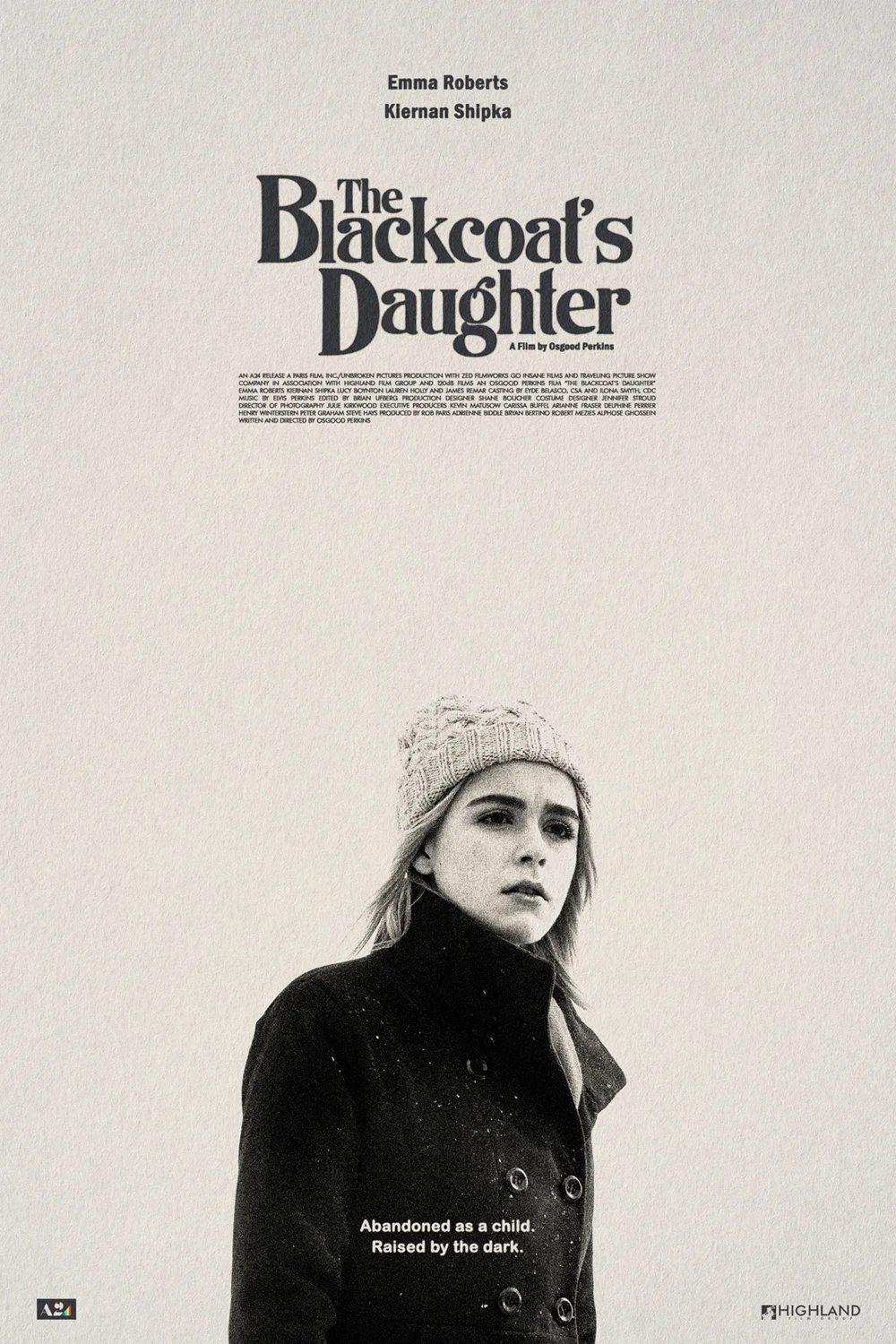
The film premiered at Toronto in 2015 under its original and better title, February. It didn't reach US cinemas until 2017, by which point A24 had renamed it to something more marketable. It made $38,000 at the box office. Essentially nothing. Since then it's accumulated a reputation that outstrips most films that opened wide that year. The New York Times put it on their list of 13 scariest horror movies in 2020, five years after its premiere, the kind of slow critical reappraisal that happens when a film was always good but arrived before its audience was ready.
I'd put it alongside The Witch and Nosferatu in a narrow tradition of horror films that trust their own silence more than their scares. It's not perfect. The pacing will lose some viewers before the halfway mark, and if you need your horror to explain its mythology, this will frustrate you. But I keep thinking about Kat bowing to the furnace. That image has a weight to it that most horror directors spend entire franchises trying to manufacture and never find.
Sources
-
The Blackcoat's Daughter - Wikipedia
-
The Blackcoat's Daughter - Rotten Tomatoes
Filed under Film & TV
This post is timestamped using Blockchain technology. Verify