Quad Spins, Cambridge Converts
Quad’s 3CDT is a low black box with a green readout, and it can’t make a sound on its own. A CD transport is a CD player with the clever half removed. It spins the disc, reads the data and hands the raw digital stream on to something else to turn into sound. In my rack that something else is the Cambridge Audio CXN100, which has its own ESS ES9028Q2M converter and already holds rips of my 2,000-odd CDs. On paper that makes a disc spinner redundant. In practice I still reach for the shelf, and the question was never whether to play discs but what should turn them into sound.
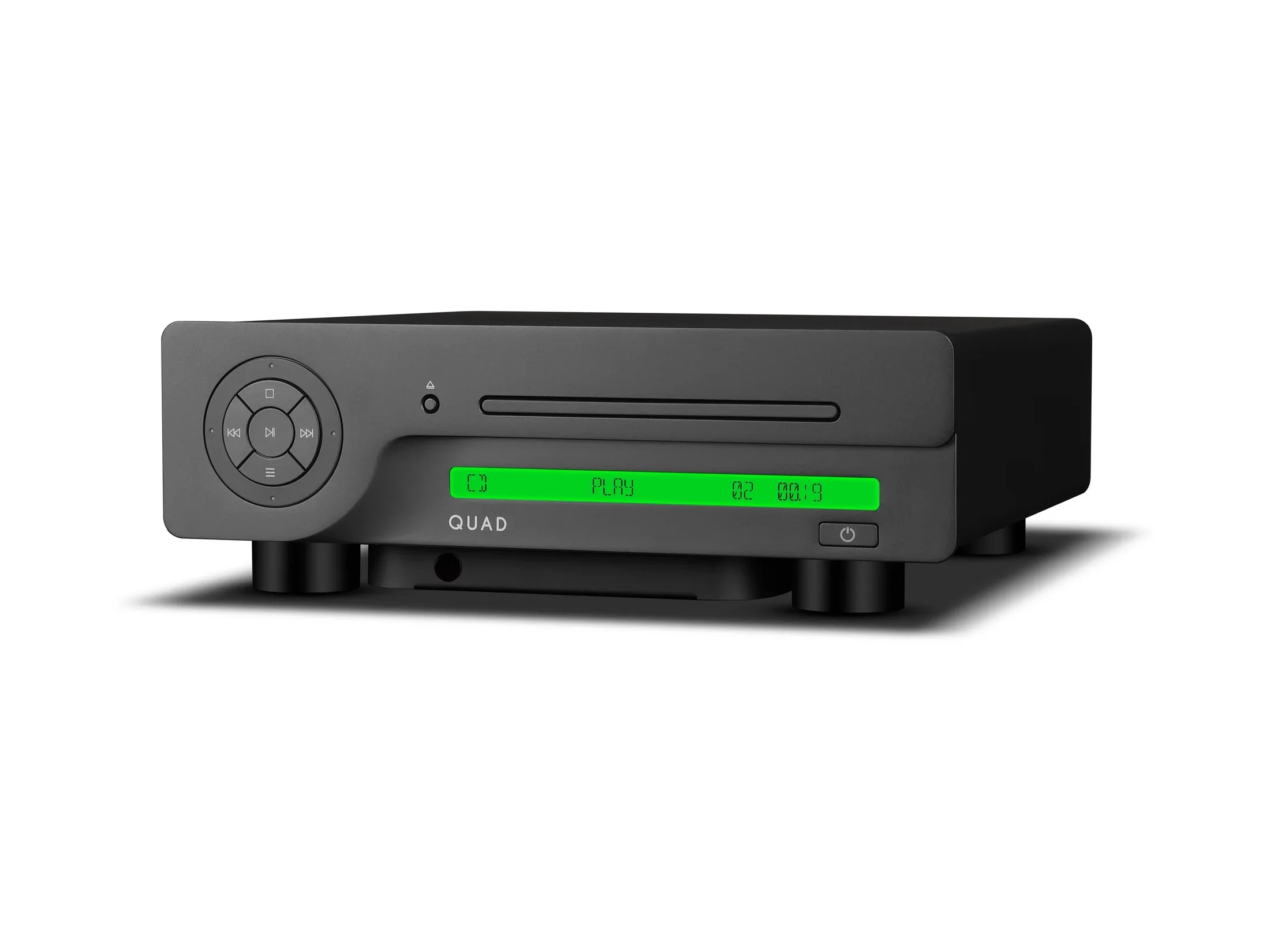
The answer is the converter I already own. Everything I play, streamed, ripped or spun, now goes through the same chip and the same analogue stage behind it. A conventional CD player would bring a second DAC into the system, with its own filter and its own idea of what the treble should sound like, and I’d spend evenings comparing disc against file when I was really comparing two converters. With a transport that confusion goes. A CD and its rip reach the same chip as the same 16-bit, 44.1kHz data, so if I ever do hear a difference, it can only come from how the data got there.
None of the 3CDT’s £599 goes on a second converter. I made the same argument about Hegel’s A200, which drops the DAC and the streamer the H200 charges for. Paying twice for conversion is still paying twice, whatever badge is on the front.
Delivery is where Quad has put its effort. According to On-Mag, the 3CDT’s power supply keeps the motor and servo circuits apart from the decoder, and a low-jitter TCXO clock times the whole thing. Spinning a disc is mechanical, noisy work, and splitting the boxes keeps it in a chassis with no converter inside to disturb. I’m less sure the clock counts for much once it leaves. S/PDIF carries the timing inside the signal, so the CXN100 recovers it at its own end, and that receiver matters at least as much as the source.
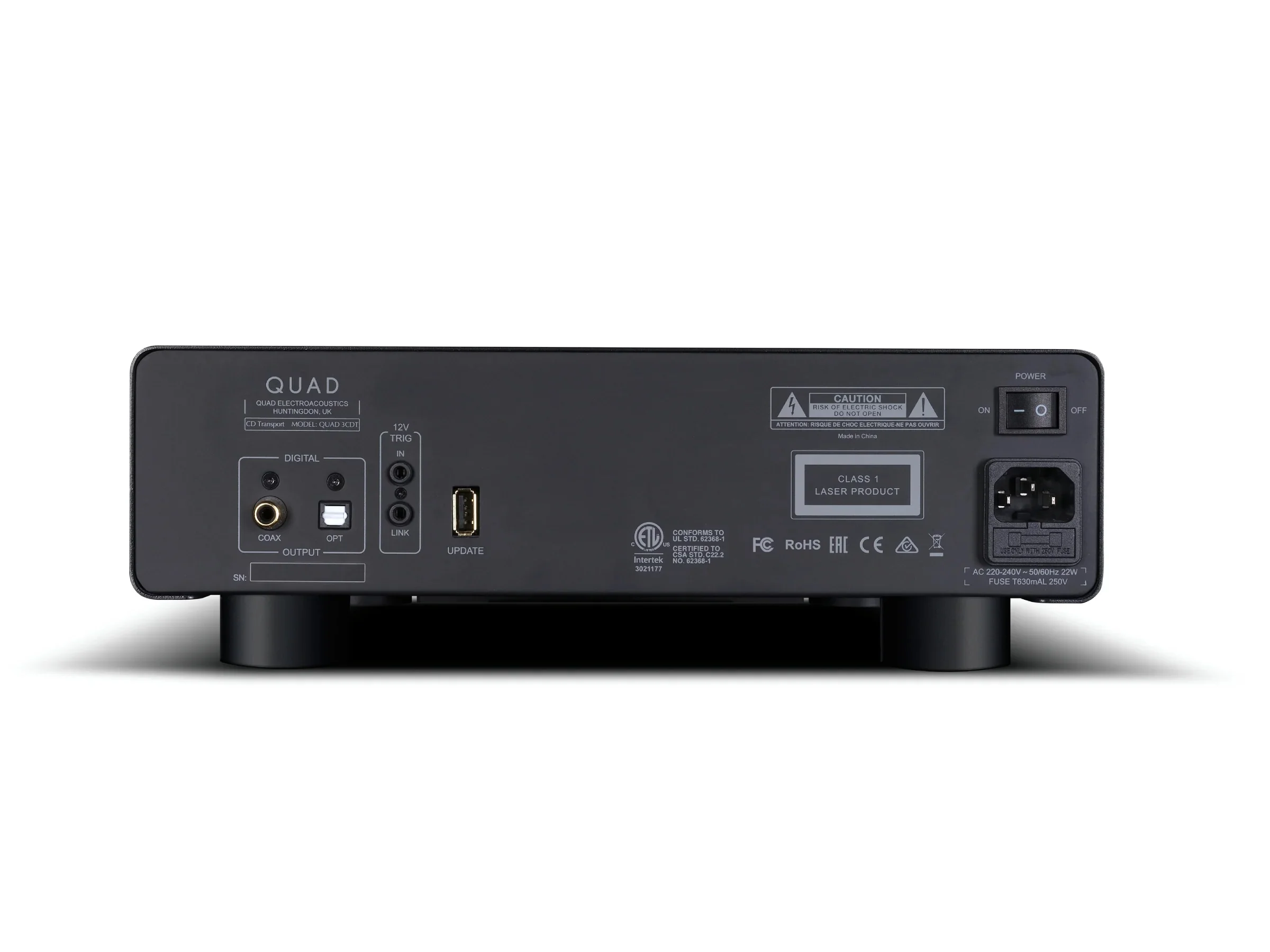
The connection is one cable. The back panel has a single coaxial and a single optical output, both fixed at 44.1kHz, and the CXN100 has an input for each. The same panel reads Huntingdon, UK, under the Quad logo and Made in China a little further along, beside the warning not to open it.
The split also leaves room to change my mind. If a DAC I like more turns up in a few years, it replaces the converter and the transport carries on reading discs into it exactly as it does now.
Sources:
-
Quad 3CDT Arrives as the Quad 3’s Quiet, Disc-Spinning Sibling — ecoustics
-
Quad 3CDT: A Beautifully Focused CD Transport for the Modern Disc Listener — Nottingham HiFi
-
Quad 3 et 3CDT : ampli Hifi et transport CD au look rétro — On-Mag
-
Cambridge Audio CXN100 review — What Hi-Fi?
Filed under Hi-fi & audio
This post is timestamped using Blockchain technology. Verify