Lagerfeld Misread Macaulay
In 1953, Rose Macaulay published a book about ruins that ended in surrender. Pleasure of Ruins is a four-hundred-page march through the Western imagination’s romance with broken stones: Roman ruins, Mayan temples, the gothic abbeys English aristocrats had built in their gardens just to watch them moulder. Macaulay wrote it a decade after the Blitz had taken her Marylebone flat and her library, and the book closes with a verdict she meant for the whole tradition. Ruinenlust, she said, had come full circle. We had had our fill.
Thirty-nine years later, Karl Lagerfeld read the book and built a couture collection out of it.
The Chanel Spring 1992 haute couture show was presented in Paris in January of that year, and even now it gets cited more than almost anything else from Lagerfeld’s tenure. Most of the citations are for one dress: a slim black silhouette layered with chunky gold-and-glass chain, worn down the runway by Christy Turlington and later, in the long afterlife of fashion images, by Penélope Cruz in Broken Embraces and Lily-Rose Depp at the 2019 Met Gala. The dress was also a brilliant marketing vehicle for Chanel costume jewellery, which was the brand’s most profitable category at the time. A Trojan horse with chains.
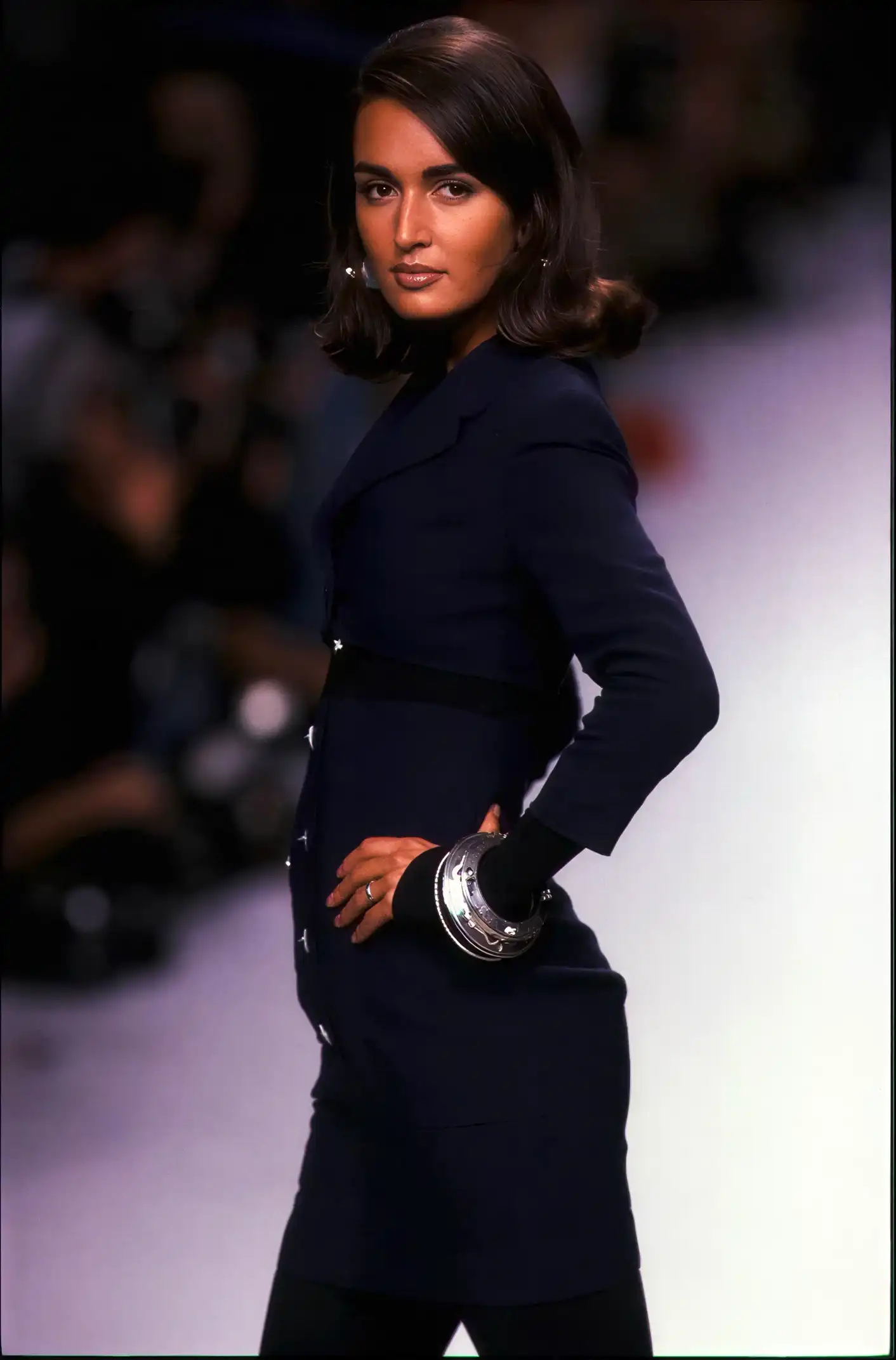
The motif kept walking the rest of the show. A navy suit cuffed in chunky chrome made the same point in plainer metal — bracelet doing the work the glass-and-gold dress had done in armature.
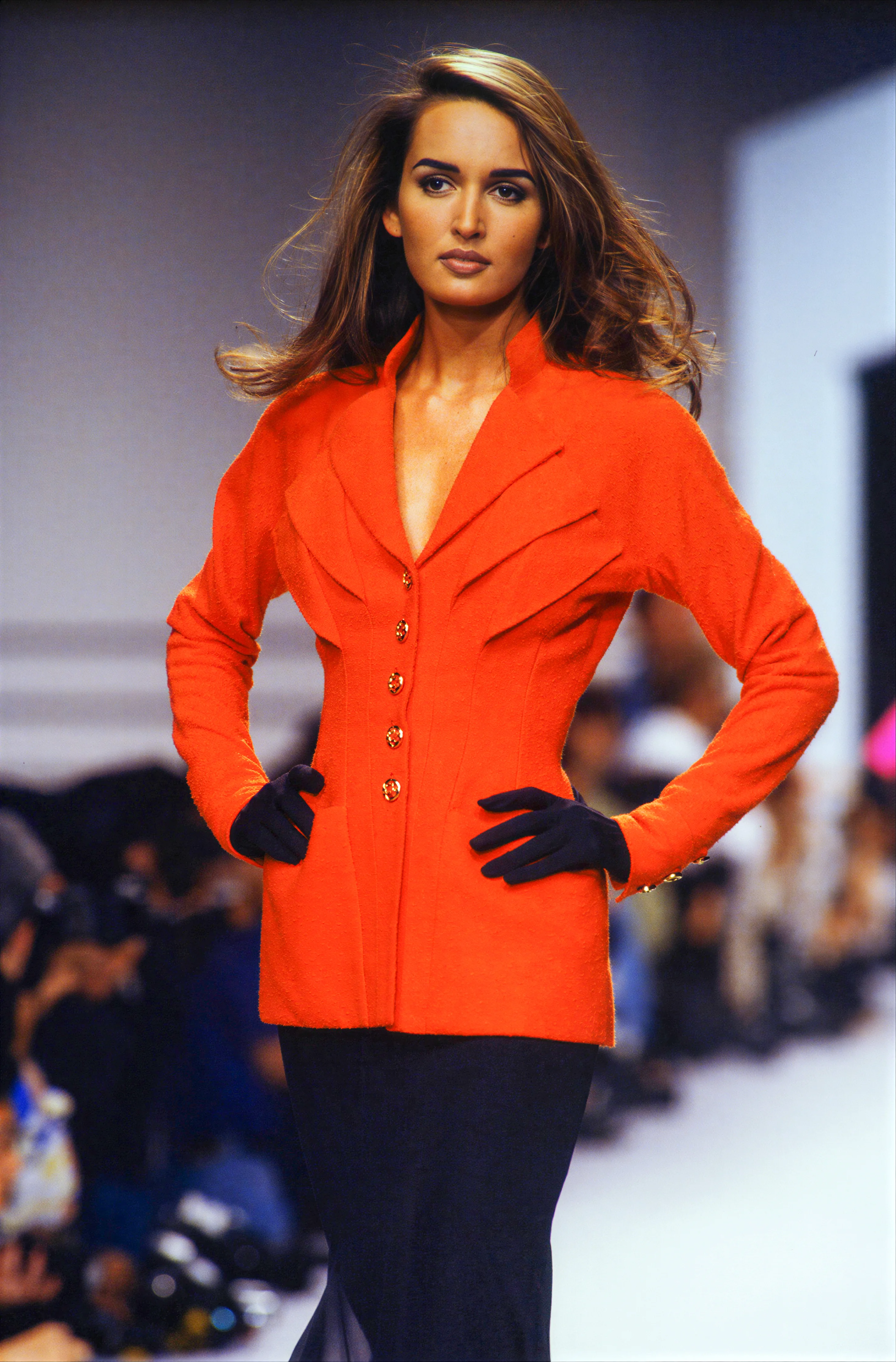
The most interesting things in the collection were not the chains. They were the jackets. Lagerfeld had built a series of trompe-l’œil tweeds that were not tweed at all: they were raffia, painted in watercolour to look like the house’s signature weave. The tailoring was so tight the jackets had to be zipped up the back rather than buttoned at the front; gold jewelled buttons running down the lapels were decoration, not closure. He called the silhouettes “diabolically body-conscious,” and looking at a single look the cameras kept, you can see what he meant. A red-orange jacket structured into one architectural line. Black opera gloves. The whole pose engineered around the absence of a front opening.
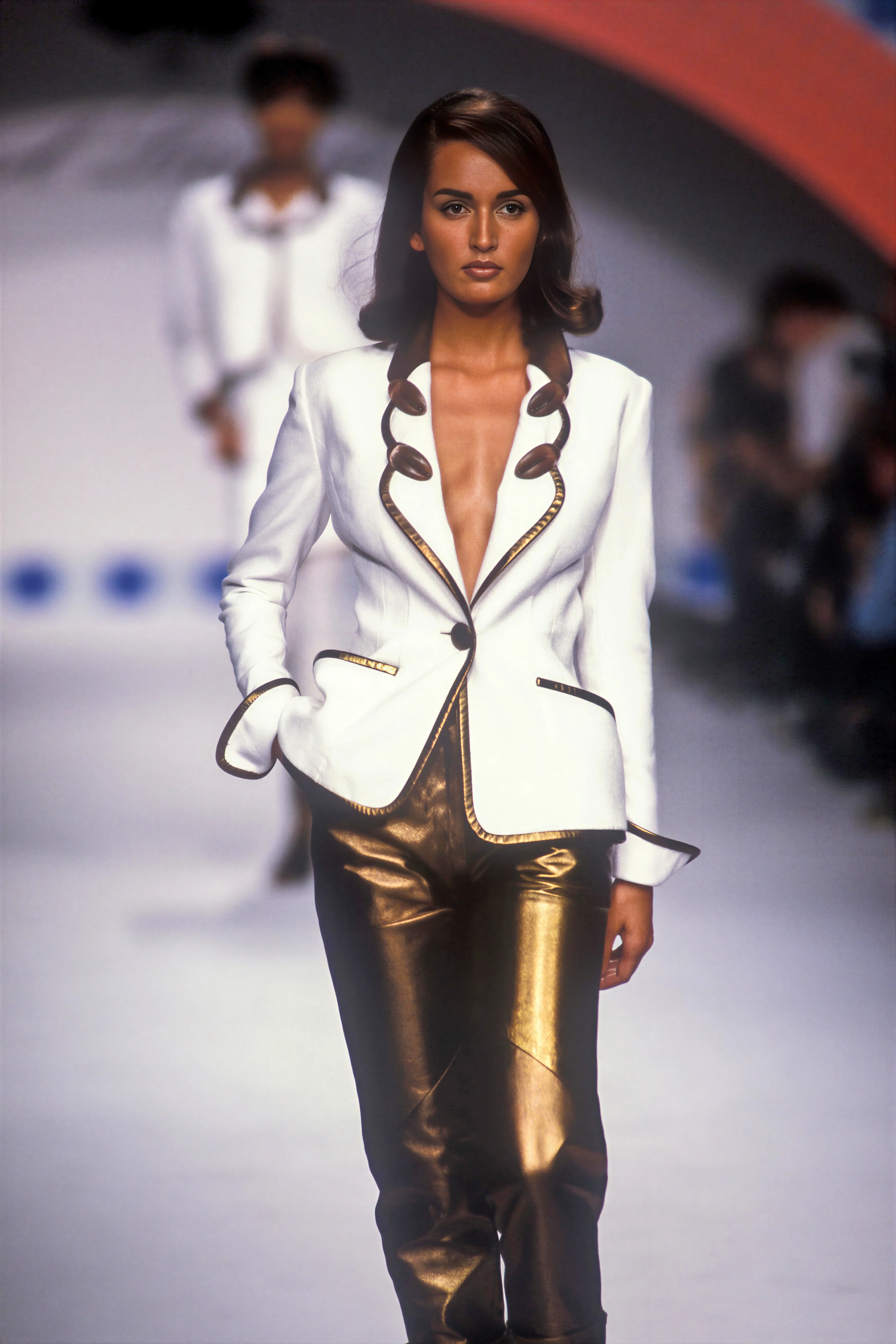
The same logic carries through the rest of the collection. A white jacket worn over gold leather trousers repeats the architecture in a colder palette: dark trim and gilded buttons running the lapels for show, a single real button doing the actual work, the front pose engineered around the absence of a closure to draw the eye to.
This is where the Macaulay reference starts to matter, and where it also starts to look strange.
Lagerfeld’s tattered chiffon skirts (separate from the jackets, but shown alongside them) were the show’s literal acknowledgement of Pleasure of Ruins. Lagerfeld is the one who told the press the book was on his mind, his favourite, the thing that pushed him toward the deliberate decay of the silk. The trade press accepted the citation at face value, then and now: Lagerfeld read a book about loving ruins, and made some clothes about loving ruins. Done.
The trouble is that Pleasure of Ruins is not really a book about loving ruins. Macaulay’s argument, and you have to push past the gorgeous central chapters about Pompeii and the Cambodian temples to get there, is that the Romantic appetite for ruin was something Europeans had earned through centuries of safe spectatorship, and that the twentieth century had revoked the licence. The bombed churches and cathedrals of postwar Europe gave her, she wrote, “nothing but resentful sadness, like the bombed cities.” Her closing line is the one I quoted at the top. Ruinenlust was over. We were finished with it.
So either Lagerfeld read the book against itself, mining the picturesque chapters and ignoring the postwar conscience, or he understood Macaulay perfectly and was making something more complicated than the trade press credited him for. A couture show built on an aesthetic the source text had already declared exhausted is, at the very least, a knowing gesture. In the same show he wrapped tree trunks in graffiti and floated bubbles down from the ceiling; he was not above an inside joke. I think he was reading Macaulay the way he read everything in his enormous, untouchable library — not as a thesis to defend but as a quarry. He took what he wanted and left the rest.
The Met has a Lagerfeld Chanel piece from his Spring 1983 debut in its collection. It is a black dress trimmed in trompe-l’œil baubles made by the House of Lesage: fake jewels embroidered to look real. Nine years before he zipped the backs of those raffia jackets, he was already running this exact substitution. The jewels would not be jewels. The tweed would not be tweed. The chain dress would be a vehicle for the actual chains in the boutique. There is a coherence to Lagerfeld’s half-century at Chanel that has very little to do with reverence for Coco and almost everything to do with what Suzy Menkes once said — that Karl had to destroy Chanel or become a caricature of her.
In January 1992, he picked up a book about the end of European ruin-aesthetics and built a runway collection from it. Macaulay had written a decade past the bombs that took her library, telling the tradition to go home. He heard a different sentence and answered it.
Sources:
-
Karl Lagerfeld’s Chanel Spring 1992 Couture Show: A Look Back — W Magazine
-
1992 Chanel Couture Chain Dress — The Looking Glass
-
“A Horrid Malicious Bloody Flame”: Elegy, Irony and Rose Macaulay’s Blitzed London — The Literary London Journal
-
Dress, Karl Lagerfeld for House of Chanel, Spring/Summer 1983 — The Metropolitan Museum of Art
Filed under Chanel
This post is timestamped using Blockchain technology. Verify